Rinnai Tankless Water Heater Installation Guide for Irvine Homeowners

A practical Irvine guide to Rinnai tankless installation: sizing by flow, permits, descaling, and whether your old pipes should be replaced too.
Replacing a tank with a tankless heater is one of the most common upgrades we quote in Irvine, and Rinnai is usually the brand on the homeowner's list. Irvine villages run on strict HOA architectural guidelines, which often decide between an outdoor Rinnai and an indoor unit with a discreet vent.
Here is what to expect from a Rinnai tankless water heater installation, what to ask before you book, and how the project connects to the condition of your plumbing.
Local factors in Irvine
Water from Irvine Ranch Water District carries enough minerals that descaling should be part of any tankless plan in Irvine. Neighborhoods such as Woodbridge, Northwood, University Park, Turtle Rock, Quail Hill were built across different eras, so gas branch size, heater location, and pipe material vary from one street to the next.
On a Irvine estimate we confirm the gas run, mark the vent or mounting spot, and check the visible supply piping before recommending a Rinnai model.
A brand choice and a plumbing decision
Choosing Rinnai settles the brand question. It does not settle sizing, location, venting, or whether the old copper or galvanized lines can handle the change. A Rinnai tankless water heater installation done carefully answers each of those questions in writing before work begins, so you know what is being replaced, what is being upgraded, and why.
Repipe OC approaches every tankless conversion the same way we approach a repipe: measure first, protect the home, pull the permit, and test before we leave.
Permits, inspection, and air-quality rules
Swapping a tank for a tankless unit in Orange County is permitted work. The inspector looks at gas sizing, venting, seismic and clearance details, and the pressure-relief arrangement. In the South Coast air basin, gas water heaters also have to meet regional low-NOx emission rules, so we confirm the Rinnai model selected is compliant for Southern California before it is ordered.
A permitted, inspected install also protects you at resale and keeps the manufacturer paperwork clean if you ever need warranty help.
Condensing or non-condensing: picking the right Rinnai family
Rinnai sells both condensing and non-condensing tankless lines. Condensing models capture heat from exhaust gases with a second heat exchanger, run cooler exhaust, and typically vent through plastic pipe—but they produce acidic condensate that needs a drain and usually a neutralizer. Non-condensing models are simpler to drain but need venting rated for hotter exhaust when installed indoors.
Outdoor-rated units skip interior venting entirely and mount on an exterior wall, which is common in coastal Orange County where freezing is rare. Indoor units suit garages, utility rooms, or homes where HOA rules limit what can hang on the outside of the house.
Irvine install notes
Before mounting anything on an exterior wall in Woodbridge, Northwood, or Quail Hill, we confirm what the village association permits. Where outdoor units are discouraged, an indoor condensing Rinnai in the garage with a low-profile side-wall termination usually satisfies the guidelines. We can supply spec sheets for an architectural application if your HOA asks.
Sizing by flow, not by square footage
Tankless units are sized by how many gallons per minute of hot water you need at once and how much the incoming water has to be heated. A two-bath condo and a five-bath home on the same street need very different units. We count showers, tubs, and appliances that may run together, then pick a model with headroom without overbuying.
If you have a large soaking tub or multiple shower heads, mention it at the estimate—those fixtures drive sizing more than anything else.
One project instead of two
Homeowners often install a tankless heater one year and repipe the next, opening the same walls twice. Combining the work means one permit cycle, one round of drywall patching, and a heater location chosen with the new piping layout in mind.
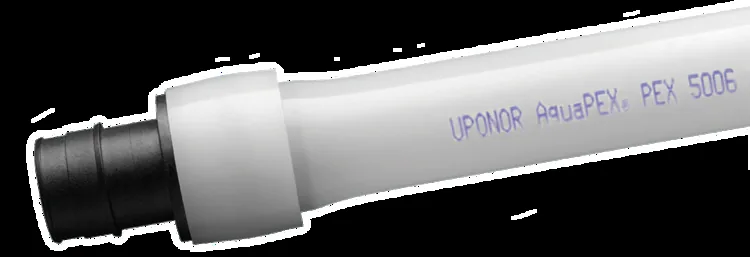
Repipe OC uses PEX-A expansion fittings for whole-house supply, which keeps full-bore flow to the heater and fixtures. If the piping is sound, we say that too and install the Rinnai on its own.
Simple ownership checklist
- Schedule a descaling flush at the interval the manual recommends for your water
- Clean the inlet filter screen during each service
- Keep vent terminations and outdoor units free of plants and debris
- Note any error codes and when they appear
- Keep your permit card, model, and serial number with the home records
A few minutes of attention each year keeps efficiency up and avoids nuisance shutdowns.
Quick answers
- Condensing vs non-condensing? Condensing is more efficient but needs a condensate drain.
- Does it need electricity? Yes, typically a standard 120-volt outlet.
- Can you remove the old tank? Yes, removal and disposal are part of the scope.
- Do you publish flat prices? No. Pricing depends on gas, venting, location, and piping condition, and you get it in writing.
Next step for Irvine homeowners
Ready to plan a Rinnai tankless water heater installation at your Irvine home? Call (949) 524-2362 or email [email protected] for a free quote. Repipe OC, 23821 Hillhurst Drive, Laguna Niguel, CA 92677. CSLB #1087885 C-36.
Repipe OC near you
Not in Irvine? The same crew serves nearby cities. See every city we serve, or jump to a neighboring city:
 Written by Repipe OC · CSLB #1087885 C-36 · 23821 Hillhurst Drive, Laguna Niguel, CA 92677 · (949) 524-2362